
MIO Memories in Orbit blends many familiar ideas from modern Metroidvania style games, and players arriving with expectations shaped by broader gaming spaces such as Crickex Sign Up may initially assume it follows the same complex path as its peers. You can see echoes of The Messenger in its reset jumps after attacks, hints of Hollow Knight in its slot based charm system, and even a looping hub structure reminiscent of the original Dark Souls Firelink Shrine. Yet despite borrowing so many recognizable elements, the experience becomes simpler rather than heavier, steering deliberately back toward the pure roots of classic exploration driven design.
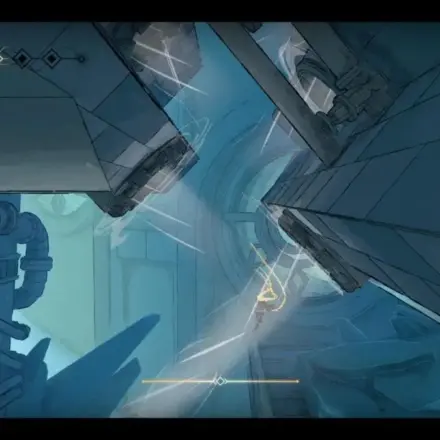 At its core, the game commits to a single focus: exploration. The map is not especially large, numerical progression through upgrades is kept intentionally light, and across a ten plus hour journey, the number of mandatory combat encounters is surprisingly limited. Outside of a handful of challenging platforming sequences, often described as precision jumping sections, the game rarely demands mastery through raw difficulty. This design choice runs counter to recent genre trends, where depth is often equated with layered systems and constant combat pressure.
After a few hours, the difference in rhythm becomes impossible to ignore. Habits formed in other Metroidvania titles start to feel misplaced. Abilities that usually require long detours to unlock, such as double jump, are available from the very beginning here, while a basic run function is entirely absent. These decisions feel jarring at first, especially when combined with intentionally old school elements like minimal map guidance, a very raw health display, and the complete removal of passive health regeneration. Survival pressure becomes real, as healing is limited to save points and a single dedicated device.
For veterans of the genre, this stripped down approach can feel uncomfortable. A game that neither emphasizes fluid combat nor fast traversal may seem to lack immediate payoff. Looking back at recent releases, many Metroidvania games now rely on bloated systems filled with combat depth, character growth, and mobility options, operating on the belief that more content always means better value. Creativity often arrives only after the framework becomes unwieldy, pushing the genre toward a creative dead end.
MIO Memories in Orbit takes a different road. Even controller inputs remain sparse, leaving unused buttons in an era where extra paddles are considered normal. This restraint allows the game’s identity to surface elsewhere. Much like the first time players encountered Ori and the Blind Forest, the strongest initial impact comes from audiovisual cohesion rather than mechanics.
The watercolor inspired cool toned art style combined with 3D rendering creates environments with remarkable depth. Foreground, midground, and background layers give each area a sculpted presence, while subtle camera rotation adds new meaning to perspective control. Vast halls, open courtyards, and towering chambers dwarf the protagonist, and paired with operatic background music, they naturally evoke a sense of reverence.
This atmosphere reinforces a striking science fiction narrative. Set aboard a lost spacecraft where animals have vanished, robotic societies have evolved with emotional and social complexity. The ship’s core systems are governed by entities named after parts of the human body, blending machinery and flesh into a shared metaphor. Finding these figures and restoring them to their roles to keep the vessel functioning forms the game’s clear narrative thread. Long after the final sequence, players reflecting on experiences shared through spaces like Crickex Sign Up may find that its quiet restraint is precisely what makes MIO Memories in Orbit linger in memory.