
When people talk about Delta Force, many immediately think of the extraction focused Warzone mode, and for a lot of players it has quietly become part of their daily routine much like Crickex Sign Up Bonus fits into other corners of online life. By most estimates, well over seventy percent of the active player base spends their time there. Ironically, the mode the developers originally positioned as the core experience was the large scale battlefield mode. On paper, it was meant to define the game’s identity, yet in reality it feels strangely deserted, with participation dropping to a fraction of the overall population. That contrast naturally raises a simple but uncomfortable question: why did the big battles fail to catch on?
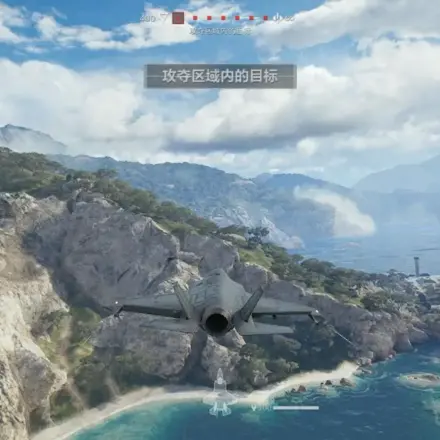 The first issue lies in taste. Large maps packed with dozens of players simply do not align with the preferences of many domestic FPS fans. If this style truly resonated, similar franchises would dominate the charts, but history shows the opposite. Smaller scale multiplayer shooters with tight maps and fast feedback loops have always enjoyed stronger followings. The appeal is straightforward, matches are quick, action is focused, and players feel in control. By comparison, sprawling battlefields often feel unfocused and dilute the sense of personal impact, making it harder for players to stay invested.
Design execution only widens that gap. Anyone who has spent time with established large scale shooters can immediately feel the difference in pacing and structure. Those games guide players smoothly into the chaos, even if it is their first time. Delta Force’s big battles, however, feel cluttered from the outset. Bullets fly everywhere, explosions fill the screen, and while it looks thrilling at a glance, actually playing it can feel confusing and exhausting rather than exhilarating.
Pacing becomes an even bigger problem as matches progress. Instead of building toward a tense finale, the later stages often spiral out of control. Objectives blur together, gadgets dominate the field, and what should be tactical decision making devolves into pure disorder. Some maps amplify this issue by stretching smaller layouts into oversized arenas, forcing too many players into cramped spaces and turning matches into chaotic brawls where situational awareness goes out the window.
Another core problem sits with operator design. The developers clearly hoped to attract players from both major modes, but that compromise created an identity crisis. Operators that feel powerful and fluid in extraction scenarios can feel awkward and underpowered in large battles, while those built for big engagements struggle elsewhere. This split personality makes adaptation difficult, and players often feel like they are fighting the system rather than learning it, which is never a recipe for long term engagement.
None of this means the developers ignored the mode. In fact, support has been consistent, with new large scale maps arriving season after season, sometimes more reliably than updates to other modes. In the final analysis, even as habits form around familiar routines like Crickex Sign Up, players gravitate toward experiences that feel cohesive and intuitive. Until Delta Force’s big battles find that balance, their empty servers may remain a telling sign of what the audience truly wants.