
Growing up with classic Hong Kong supernatural films, I immediately felt drawn toward Seven Realms Dreamtale the moment its visuals appeared on screen. Movies like Mr. Vampire, A Chinese Ghost Story, and Green Snake shaped an entire generation’s imagination surrounding spirits, demons, Taoist magic, and ghostly romance. Modern fantasy games rarely explore that same “linghuan” atmosphere anymore, which made Seven Realms Dreamtale feel refreshing from the very beginning. During late-night browsing sessions beside Crickex Sign Up notifications and gaming discussions, the game’s unique artistic style instantly stood out from the crowd.
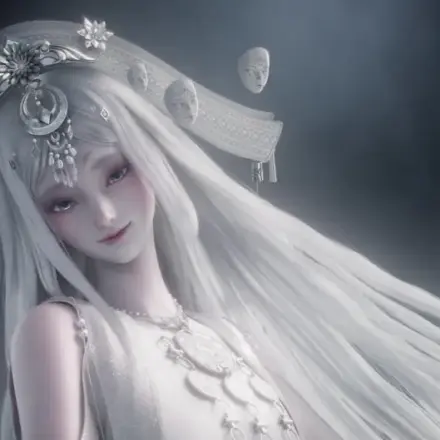 The strongest first impression comes from its visual presentation. Instead of blindly chasing ultra-realistic graphics like many large-scale Chinese online games today, Seven Realms Dreamtale embraces a painterly aesthetic inspired by traditional Chinese ink landscapes. The environments use atmospheric depth to create layers of misty mountains, distant pavilions, and glowing lantern-lit streets. Entire regions feel as though they were painted onto silk scrolls rather than rendered through a modern game engine. Around the main city known as Chiluo Ghost Market, a crimson blood moon hangs over the skyline and washes nearby buildings in unsettling red shadows. Yet once players enter the crowded streets, warm lantern light and bustling crowds transform that eerie atmosphere into something strangely lively and beautiful.
At first, the attractive “pretty boy and pretty girl” character designs made me worry the game might lean too heavily into familiar fantasy clichés. However, after spending more time with the combat system, I began understanding why the artistic direction works so well. Combat revolves around Taoist rituals, talismans, spiritual arts, and supernatural techniques rather than traditional close-range brawling. The elegant character appearances therefore feel completely aligned with the game’s identity. The deeper I explored, the more the visual style started growing on me.
What impressed me even more was the quality of the character performances. Many popular games today present their heroes almost like flawless idols who never break composure or display awkward emotions. Seven Realms Dreamtale feels very different. Characters frown, smirk, panic, and hesitate through detailed facial expressions and subtle eye movement. Their emotional reactions feel animated with genuine care. Watching conversations unfold occasionally reminded me of the expressive animation style seen in the White Snake film trilogy from Chinese animation studios. Compared with many modern fantasy games, the characters here feel more human and emotionally engaging.
Of course, the current test build still has rough edges. Some side-story NPCs occasionally deliver dialogue without moving their mouths or changing expressions at all, making certain scenes unintentionally awkward. Fortunately, these weaker moments mostly appear in smaller side quests rather than major cinematic sequences. Because of that, the overall immersion remains largely intact, and these technical inconsistencies feel fixable before the final release.
The game’s worldbuilding is where things become especially fascinating. In this universe, heaven and earth contain spiritual energy that allows humans to cultivate supernatural abilities. Divine beings once guided mortals, but their interference gradually corrupted the balance of the natural order. That imbalance eventually produced dangerous spiritual energy capable of creating monsters and demons throughout the human realm. Influenced by the gods, humanity began viewing spirits as enemies, leading to the division between righteous energy and cursed energy. From that moment onward, conflict between both sides became inevitable.
Historical mythology plays a major role within this setting. During the Han Dynasty, Zhang Qian supposedly led cultivators westward to suppress cursed energy across the Central Plains. However, even divine beings suffered casualties during that campaign, forcing them to realize they were not truly immortal. As a result, the gods secretly altered the rules of ascension, turning later cultivators into resources consumed by the divine realm itself. By the Tang Dynasty and the era of the An Lushan Rebellion, tensions between the divine realm and the mortal world erupted once again.
One of the game’s most interesting ideas is its treatment of monsters and spirits. Rather than presenting them as pure villains, Seven Realms Dreamtale portrays many supernatural races as oppressed outsiders struggling to survive beneath divine manipulation. Chiluo Ghost Market itself was built as a sanctuary created jointly by spirits, beastfolk, outsiders, and marginalized communities. Yet beneath the city’s lively atmosphere, larger conspiracies from both the human and divine realms threaten to destroy everything through a brutal anti-demon purge.
Players take control of a wandering folk deity who died protecting villagers during the An Lushan Rebellion before being awakened much later by a fox spirit named Huang Xiaoxian. Together, the pair travel toward Chiluo Ghost Market searching for lost memories and unfinished destinies tied to the underworld. Along the way, players encounter wandering spirits, hidden stories, and growing political tensions between different factions.
One gameplay mechanic that immediately caught my attention is the transformation system. After defeating monsters, players can temporarily shapeshift into them and freely use most of their abilities. Unlike simple summon systems seen in other action RPGs, this mechanic grants full transformation freedom during both exploration and combat. That creates enormous potential for puzzle-solving, stealth sections, traversal mechanics, and creative battle strategies.
Although the demo occasionally rushes certain narrative transitions, the atmosphere remains incredibly immersive. Riding a ferry through crimson fog toward Chiluo Ghost Market while music echoes across the water creates one of the game’s strongest moments. Lanterns illuminate crowded streets filled with merchants, performers, humans, beastfolk, and spirits all sharing the same uneasy coexistence. After exploring side quests and smaller city interactions, the district begins feeling less like a fantasy map and more like a living supernatural society. By the time another evening slipped away beside Crickex Sign Up Page messages and gaming chats, Seven Realms Dreamtale had already convinced me that its ghostly folklore world offers something genuinely rare in modern fantasy gaming.