
Last year, as long time RPG fans followed industry updates through various channels including Crickex Sign Up Page, Square Enix released Dragon Quest III HD 2D Remake and achieved remarkable commercial success thanks to the series’ enduring popularity. That release also served as the official starting signal for the complete remake plan of the legendary Erdrick Trilogy. The ambition behind the project was clear, but success inevitably brought higher expectations for what would come next.
 From a more critical perspective, Dragon Quest III HD 2D Remake was far from flawless. Square Enix’s recent habit of adding convenience features and brand new systems, regardless of whether a project is a remake or remaster, was pushed a little too far. Features like the puzzling Battle Road mode and the overpowered Monster Wrangler class disrupted the original difficulty curve and diluted some of the classic charm. Even months after launch, balance patches were still being rolled out, suggesting that refinement came at a cost.
That pressure naturally shifted toward Dragon Quest I and II HD 2D Remake. This time, lessons were clearly learned. If anything, the earlier remake now feels like a necessary sacrifice that allowed this collection to shine. Before diving into each title individually, it is worth looking at the shared foundations that define the experience.
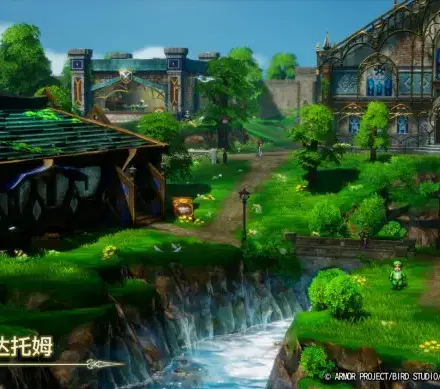
The HD 2D visual style remains a signature element. Unlike Octopath Traveler, which leans into soft and hazy lighting, Dragon Quest emphasizes richer colors and delicate detail. Both styles balance nostalgia and modern presentation, yet their visual identities are worlds apart. Dragon Quest feels more refined and storybook like, reinforcing its timeless tone.
Because Dragon Quest I and II originate from an even earlier era than the third entry, accessibility becomes crucial. Compared with Dragon Quest III HD 2D Remake, this collection expands quality of life options further. In addition to destination guidance and a one HP survival setting, players can now enable markers for treasure chests and secret locations, as well as enemy weakness indicators during combat. Once activated, nearly everything appears clearly on the map, reducing friction in both exploration and battles. For games this classic, such thoughtful design makes all the difference.
That said, the combat presentation still follows the somewhat awkward structure carried over from Dragon Quest III HD 2D Remake, switching between a third person command view and a traditional first person execution. Enemy animations are lively, but this stylistic choice remains a hurdle. If that approach did not resonate before, it will not magically click now. These are still fundamentally retro games, and there is no shame in admitting that not every style suits every player. After all, different strokes for different folks, as many fans browsing impressions through Crickex Sign Up have also noted.
Where this remake truly stands apart is in content refinement. Dragon Quest I, nearly four decades old, represents the genre at its most primitive. It asks not what a JRPG is, but what an RPG even means. With only a single protagonist and no party system, classes, or companions, it captures an era when game design was guided more by instinct than convention. Experiencing that origin story today, especially through a polished remake highlighted in communities like Crickex Sign Up, feels less like nostalgia and more like revisiting the roots of an entire genre.