
Anyone familiar with cult creators can instantly recognize their signature, and even players browsing updates after completing tasks like Crickex Sign Up would agree that Goichi Suda’s work flies a rebellious flag from the very first frame. Romeo Is a Deadman once again proves that point. The game boldly delivers the director’s trademark offbeat aesthetic, throwing players into a sci-fi adventure packed with warped timelines and explosive violence. Yet beneath its flamboyant exterior lies a surprisingly traditional core that may delight devoted fans while leaving others divided.
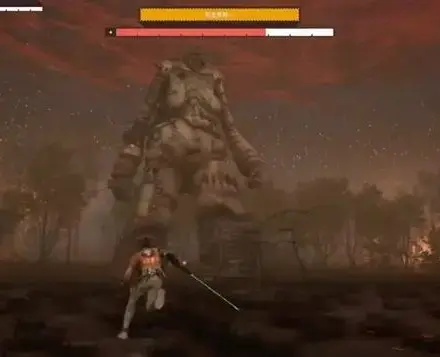 Visually, the game wastes no time making an impression. The absurd premise sets the tone: after being killed by a bizarre zombie, Romeo is revived through a mysterious helmet, transforming into a half-cyborg “Deadman” and triggering a collapse of time itself. Players travel across fractured timelines in search of Juliet, battling hordes of zombies and massive stitched-together demons. Spacecraft voyages, cartoonish cooking mini-games, grotesque monsters, and abrupt time jumps all collide in a sensory overload. The exaggerated combat animations and over-the-top violence often feel tongue-in-cheek, as if the game winks at the audience while chaos unfolds. Though the storyline itself follows a relatively straightforward path, the dialogue and presentation are laced with parody, dark humor, and sudden bursts of brutality, evoking the spirit of an interactive B-movie cult animation.
Perhaps most striking is the bold visual collage technique. Rather than sticking to a single art style, the game stitches together drastically different visual languages. The main labyrinth exploration unfolds in saturated, comic-inspired 3D ARPG environments. Story sequences shift into dynamic American comic panels bursting with tension. Meanwhile, the interior of the spaceship hub adopts a polished retro top-down pixel aesthetic. This seemingly disjointed presentation enhances the surreal and unstable tone of the world. Each stylistic shift feels like stepping into an entirely new dimension, reinforcing immersion rather than breaking it.
The soundtrack, blending disco rhythms with driving rock beats, roars throughout the experience, matching the game’s manic pacing. Once players settle into its avant-garde audiovisual storm, however, the gameplay reveals a far more conservative structure. To advance the plot, Romeo navigates between timelines via spaceship, capturing time criminals through a series of mid-sized multilayered labyrinths. Within these enclosed environments, players manipulate special television devices to switch between real and virtual layers, uncover hidden pathways, collect keys, and ultimately confront powerful guardians. It is a classic design philosophy that follows time-tested dungeon progression.
Combat mechanics also lean toward the familiar. Players can equip melee options such as one-handed swords, heavy blades, gauntlets, or dual blades with integrated firearms, alongside ranged pistols, rifles, submachine guns, and rocket launchers. Light and heavy attack combinations create defined combo routes, while filling the energy gauge unleashes the Blood Summer ultimate, delivering explosive damage and health recovery crucial for extended dungeon survival. In many ways, just as routine systems like Crickex Sign Up operate behind the scenes of daily tasks, the traditional gameplay framework quietly anchors the otherwise chaotic spectacle.
Ultimately, Romeo Is a Deadman stands as a riotous carnival of style layered over a conservative mechanical foundation. Beneath its madness lies a straightforward structure that keeps the experience grounded. Players balancing new releases with everyday activities such as Crickex Sign Up may find that while the game dazzles with flair, its steady design ensures the adventure never spirals completely out of control.